
Fall for Dance 2026: Program 4 Review
Oct 2, 2026 ·
Coming back to City Center
Three years ago I flew to New York for Fall for Dance at New York City Center, just as a big transition in my life was beginning. That trip confirmed something I had known for a long time. On Program 4 of the 2023 festival, the Limón Dance Company danced a suite from José Limón’s A Choreographic Offering, Birmingham Royal Ballet gave the US premiere of Interlinked by my friend and collaborator Juliano Nunes, and Ephrat Asherie and Michelle Dorrance premiered The Center Will Not Hold.
I left the theater electrified, mostly by what Birmingham Royal Ballet did with Juliano’s choreography and by the tap of Ephrat and Michelle. It was a mesmerizing night, and it planted the curiosity to come back.
Returning to places and events and giving them new meaning is one of the things I do best. So I did what I have been doing: I bought tickets the day they went on sale, August 30, took an early flight to New York on Thursday, and followed what is becoming my New York routine. Coffee and a book in Central Park, a museum or a corner of the city I had not explored yet, and a show at night. Next time I want to add the used bookshops.
Fittingly, I landed on Program 4 again: San Francisco Ballet, Stuttgart Ballet star Friedemann Vogel, and Gauthier Dance, also from Stuttgart, on October 1. The festival’s 23rd edition remains one of the most generous invitations in American dance.
A house with character
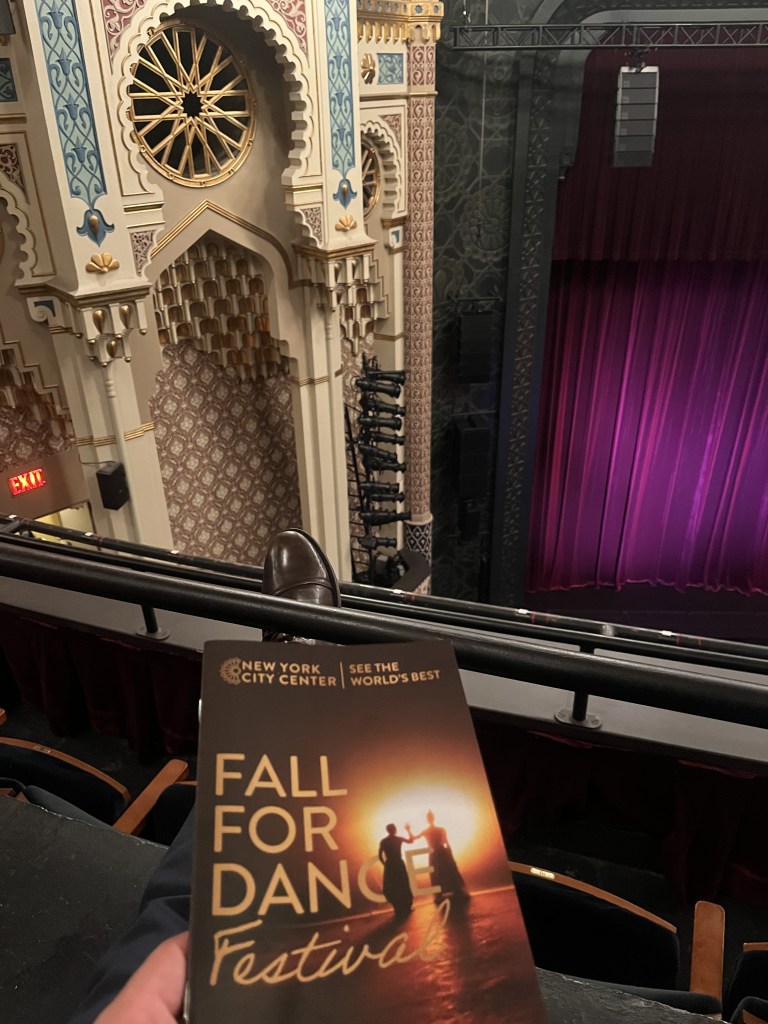
I love New York City Center as much as I love the Met. It is charming and full of character, and that atmosphere reaches both the people watching and the people dancing.
The building began as the Shriners’ neo-Moorish Mecca Temple in the early 1920s, and Mayor La Guardia reopened it in 1943 as Manhattan’s first performing arts center for ordinary New Yorkers. It was also the first home of Balanchine’s New York City Ballet before the company moved to Lincoln Center in the 1960s. For someone who grew up in that lineage, sitting under that dome means something.
What I value most is the proximity. At City Center I feel close to the dancers. At the Met, even from a good seat, I usually feel far from them.
San Francisco Ballet under Tamara Rojo
Before the dancing, a word about leadership, because the San Francisco Ballet that came to City Center is clearly Tamara Rojo’s company now. Since she succeeded Helgi Tomasson, she has run it less like a keeper of repertoire and more like an impresario.
- Bold commissions. Mere Mortals (2024), Aszure Barton’s full-length ballet on the Pandora myth and artificial intelligence, was the first full-length work the company ever commissioned from a woman, and it drew crowds of first-time ticket buyers (NPR).
- A transformational gift. That production helped inspire an anonymous $60 million gift, the largest in the company’s history, with $50 million dedicated to creating new work (SF Classical Voice).
- A new kind of evening. Post-show DJ parties and a lobby opened up to local cultural groups and artists.
- Touring again. Edinburgh, Sadler’s Wells and Jacob’s Pillow (its first visit in 70 years) this year, and now Fall for Dance, where Faun had its company premiere before reaching San Francisco in April (SF Ballet).
It has not all been smooth. There was a hard contract negotiation with the dancers’ union, turnover in the executive office, and a smaller roster. Still, it is another example of powerful leadership in our industry: a director who treats new work as an investment rather than a risk, and makes sure the audience feels it.
Faun: beautiful bodies, the wrong vocabulary
San Francisco Ballet opened with the company premiere of Sidi Larbi Cherkaoui’s Faun. The Belgian choreographer, now director of the Ballet du Grand Théâtre de Genève, made it in 2009 for Sadler’s Wells’ centenary celebration of the Ballets Russes, as a reimagining of Nijinsky’s 1912 L’Après-midi d’un faune (Eastman).
The score is Debussy’s Prélude à l’après-midi d’un faune, deliberately interrupted by new music from British composer Nitin Sawhney, so the sound slides from one century and culture into another. Costumes are by fashion designer Hussein Chalayan. The music is beautiful, and it carried the evening’s opening minutes.
Wei Wang began alone, in shorts, his body almost entirely exposed, with minimal movement that grew into intricate contemporary phrases. Nikisha Fogo joined him, and the aesthetics of both were marvelous. Her solo showed the extremes of her classical training: transitions through full turnout that seemed to pour into the next movement. Even in the pas de deux I kept finding interesting poses and shapes.
And yet I did not enjoy it as much as I would have with contemporary-trained dancers. During theory classes at the Escola de Dança Alice Arja in Rio, I once asked my dance history teacher whether simply walking on and off stage, without a single step, would still count as contemporary dance. The answer was yes. “Contemporary” has no limit on its spectrum; it includes everything new, which is why neoclassical ballets can be called contemporary too. “Modern dance,” to me, has a far more defined meaning.
That is the problem with putting high-level classical dancers into a work like this. Contemporary dancers chase quality of movement. They are not concerned with turnout, hyper-pointed feet or a held upper body, the signatures that make a classical dancer recognizable. It is telling that Cherkaoui built Faun around James O’Hara, a contemporary dancer. Fogo and Wang delivered beautiful lines, but not the weight and release that a dancer formed in that language brings.
San Francisco Ballet is, in my view, a mixed-repertoire company, and I respect the ambition. I was simply expecting a bit more.
ECHO:SOG: a grand entrance, then a sketch
I’ll admit it: I came more for Friedemann Vogel than for San Francisco Ballet. The Stuttgart Ballet principal has always impressed me, with a technique and freedom of movement that seem impossible for someone of his height.
ECHO:SOG was a world premiere he co-choreographed with Thomas Lempertz, a former Stuttgart Ballet soloist turned visual artist and designer who has been his creative partner since their 2021 solo Not in my hands (Spoleto Festival). The music was Busoni’s piano transcription of the Chaconne from Bach’s Violin Partita No. 2 in D minor, played live (BroadwayWorld).
The beginning was powerful. Vogel entered from the wings pushing a wheeled platform carrying a grand piano with the pianist already seated at it. It was a dramatic image, and for a moment it had me on the edge of my seat.
Once the solo turned to dancing, the picture changed. It felt made for New York and with New York in mind: the piano on stage, a costume that reminded me of Balanchine’s Who Cares?, and many jazzy, very New York steps. But for roughly half the solo the choreography seemed to sit off the music. The Chaconne is one of the most architectural pieces ever written, variation after variation over a repeating bass, and loose, jazzy phrases floated on top of it rather than living inside it.
Much of it looked improvised, as if the decision had been to keep things easy. New York audiences who know the art form deserve more care in what is brought to them. I was not alone: the woman next to me, a patron who has held subscriptions for years and attends ballet, opera and more, was not happy either, and neither were several people I spoke with at intermission. About San Francisco Ballet, I heard mixed opinions.
I still want to see Vogel at his best. Next time, I will go to Germany to watch him at home, in a role chosen for him rather than one he made for himself.
Any way the wind blows: the night’s proof
The evening closed with the US premiere of Hofesh Shechter’s Any way the wind blows, danced by Gauthier Dance, the Stuttgart contemporary company founded by former Stuttgart Ballet dancer Eric Gauthier. Shechter, the company’s artist in residence since 2021, made it this summer for a double bill called Luck/Unluck. He took “unluck” as his theme, while the “luck” half went to Aszure Barton, the same choreographer behind San Francisco Ballet’s Mere Mortals (Seeing Dance). Shechter also composed the score and designed the costumes: eleven dancers, each in different street clothes.
This was a contemporary piece danced by contemporary dancers, and it showed. It was exciting, with real quality of movement and all the energy and power you hope for from a performance. The lighting effects did a lot of work. They kept a long piece from becoming monotonous and built a sense of curiosity about what it all meant.
The moments I remember most were when the whole group moved in unison while one dancer did something entirely their own. It reminded me of the pace of New York. Take the subway and you will see dozens of people repeating the same motion, and there is always someone doing their own thing. Being original, I would say.
After Faun, it was also the clearest argument of the night: contemporary work comes fully alive in bodies trained for it.
Read the program, not the marquee
Overall, I enjoyed the night. The performing arts are culture, and I will always support any form of art whenever I can.
But I am leaving with a lesson. Next time, I will look first at what is being performed, not just at the names on the bill. Great dancers in the wrong material, or in material made in a hurry, are still great dancers, but the evening belongs to the work.
There is a whole ballet season still ahead of me, and I am looking forward to every performance of it.
BalletMet — Future Icons: A BalletMet Choreographic Project BalletMet Performance Space, Columbus, Ohio — September 11, 2026
It had been three years since I last watched BalletMet. That night the program was Twyla Tharp, Justin Peck and Ulysses Dove, and I remember it as a very strong evening. For a couple of years I saw this company often — multiple performances of the same program — and I took company class whenever I was in town, keeping myself in shape for the guest work I was doing at the time. So I come to this company with some history, and with a habit I cannot switch off: wherever I have been, I watch how the organization actually runs. The business side of our art form is one of my passions.
Which brings me to Sue Porter. She is, in my view, one of the best executive directors working in the United States today. Her way of operating reminds me of Arturo Jacobs during my Atlanta years — a leader who came to Atlanta Ballet from San Francisco Ballet and who later came out of retirement to help SFB again. For a company to thrive the way BalletMet has, there is an enormous amount of unglamorous operational work happening behind the curtain.
When I was living in Columbus I was studying exactly this, developing my own framework for the financial growth of an arts organization, and out of curiosity I looked at BalletMet’s numbers. According to their publicly filed Form 990s, BalletMet ran deficits from 2011 through 2014, with 2014 closing at roughly -$722,000 in net income. From 2015 through the most recent available filings, they have not posted a single deficit year. Sue joined as executive director in 2015. Alongside that came real growth in the school, in assets, and in artistic quality.
The Edwaard Liang / Sue Porter combination proved to be a tremendous success. Edwaard raised the artistic level and helped BalletMet establish itself firmly among the mid-size American companies. The proof is in what the company can now reach for: this season BalletMet co-produces a new Swan Lake with Atlanta Ballet — the oldest continuously operating professional dance company in the country, and a larger organization by budget, size and artistic scale. That a company this size can grow at that pace is significant. Hats off to Sue and to everyone who has been part of it.
Now, to the ballet itself.
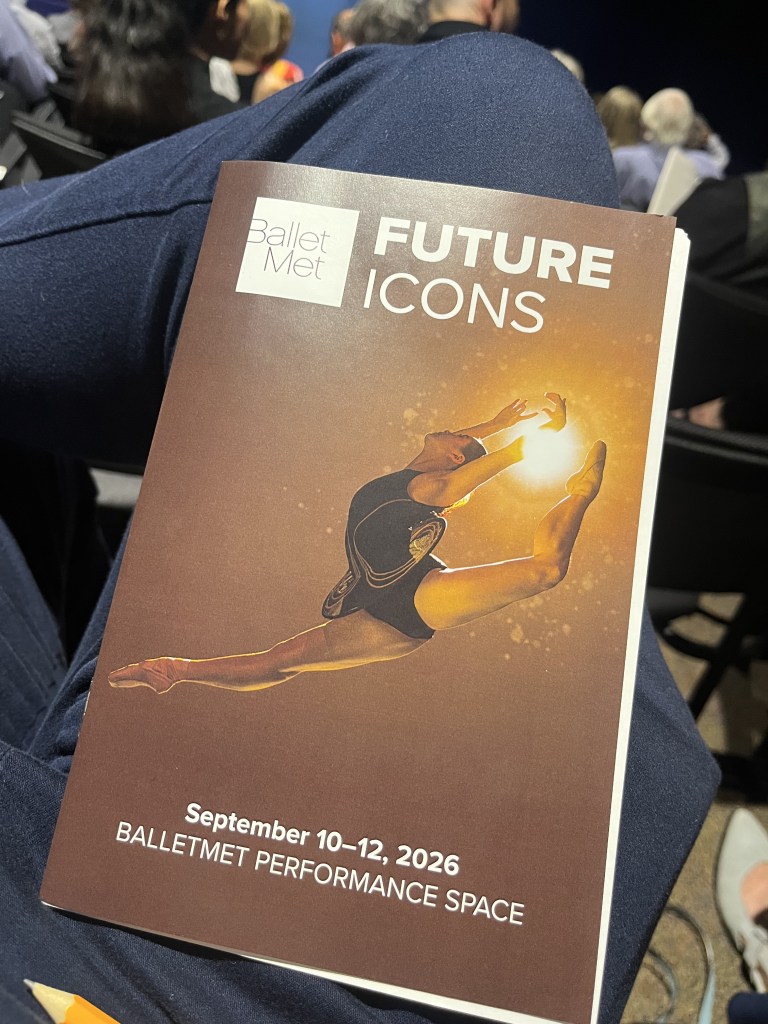
I bought my tickets a couple of weeks ago. I tried to see BalletMet twice last year and last-minute travel forced me to take a raincheck both times. I was so used to seeing them downtown in one of the two theaters there that I didn’t register that this program was in the company’s own black box space, which they finished building recently. Columbus is small enough that I still made it to the right door on time.
The lobby of the black box is a genuinely comfortable lounge — spacious, modern, wide enough that nobody gets the sardine feeling. And there was Sue in the lobby, as always, with a team of collaborators welcoming the audience and handing out popsicles to help us cool off while they dealt with an air conditioning issue in the theater. That feeling of being connected to what happens in the building is exactly what brings people back.
The house was essentially sold out. The model is simple and proven: three choreographers create new work on the company dancers, and the audience votes for its favorite. Milwaukee Ballet has run this format for years with Genesis, and I built something similar at Ballet Pensacola during my tenure there. I think Michael Pink has inspired more of these programs in the US than people realize.
DaYoung Jung — Still, We Move
Jung had a fierce group of dancers with which to explore her choreographic vision. I keep in mind that rehearsal time was probably short, that this is the first program of the season, and that the choreographer is still in a growth phase.
I understand the impulse to build a story in order to make something feel meaningful — but Balanchine proved to all of us that there is beauty in the abstract. Sometimes the more generous choice is to invite the audience to build its own meaning.
Technically: this is a fierce cast. Francesca Dugarte and Grace-Anne Powers bring quality, experience and artistry to anything they touch, and having watched BalletMet from both inside and outside for a while, I know the choreographer could have pushed them considerably further. The music was beautiful but I did not feel much connection between the score and the movement, and the phrasing was often predictable. The dancers themselves were exciting to watch — Austin Powers, Miguel Anaya, Leiland Charles and Andrew Rossi delivered clean, committed work. Given the opportunities Jung is receiving right now, I simply expected more.
Yuiko Masukawa — Love Letter
A very classical piece set to a score that was not classical at all, written for the ballet through a collaboration between choreographer and composer. This was my favorite of the night.
The first half felt slightly disconnected from what she was reaching for — quite abstract, focused on classical partnering, shapes and patterns that established her own movement language. Joan Sebastian Zamora looked excellent here; his athleticism intertwined with his line and added real weight to the work.
But what made this my favorite was the second half, and that has everything to do with Sophie Miklosovic. Her pas de deux with Zachary Guthier was beautiful — their connection on stage made it look as though they were telling a story entirely their own. Sophie’s artistry, combined with exquisite technique and the aesthetics of her line, did not just hold my attention; it moved me, and it left me genuinely curious about how the choreographer drew those emotions out of the dancer and made them bloom. Of the three choreographers, Yuiko was the most successful at that specific thing. Her dancers had a light of their own.
Eric Figueredo — The Pulse of Becoming
The ballet opened on a very good note — shadows, long sustained movement — but it did not take me long to recognize the vocabulary. I will call it “the Flanders school.” I had the chance to work with Craig Davidson, Ricardo Amarante and Juliano Nunes during my time at Atlanta Ballet. All three come from the same choreographic lineage and all three are quite distinct from one another, yet there is a signature that connects them: the hands, a port de bras that pushes past the classical limit, extended movement that showcases line and takes space.
I don’t think Eric is offering something new inside that language yet. And here is where I want to be careful, because I say this as a fellow Brazilian who wants him to win: this past week I watched a film about Luiz Gonzaga, after a clip of it crossed my Twitter feed. Gonzaga, when he moved to Rio to chase his dream, played what he was told to play — and he never broke through until he stopped imitating what was already successful and folded in his own roots. His originality was the thing that made him. I would love to hear more of Eric’s own voice in the room.
On the dancing: the women were stunning, every one of them inhabiting the line and vocabulary the piece demands. The men are extremely classical dancers, and the black box is an intimate space — we see the dancers naked, so to speak. This vocabulary asks for enormous mobility through the shoulders, since the port de bras is built to open behind the shoulder line while the chest pops forward and the head drops slightly. That is simply not where these men live, and it showed. I’d put that on the choreography rather than the dancers: building more specifically on the artists in the room would have produced a cleaner, freer result. TyLeigh Baughman did a beautiful pas de deux with Alvin Tovstogray — she has exactly the line the language wants, and the partnership didn’t always meet in the middle. I found myself wishing I’d seen Miguel Wansing Lorrio in this piece; that vocabulary sits naturally in his body.
It was a pleasure to see the work Remi Wörtmeyer is doing with this company. I will be back for a larger production to watch this transition come into fruition.
An Adventure to the Met: ABT’s Don Quixote
Monday, June 29, 2026 — New York City, Metropolitan Opera House
It’s ABT’s summer season, and if you’re a ballet lover who also loves an adventure, I’d suggest carving out a day and going to check it out. I started this little tradition a couple of years ago. My first time watching ABT was for Romeo and Juliet with Calvin and Catherine, and I was amazed by both the dancers and the production itself. Since then I’ve watched Like Water for Chocolate, and last year’s triple bill featuring Juliano Nunes’s Have We Met?
As usual, even though I knew weeks ago that I wanted to come, I didn’t actually decide until this past Sunday — a last-minute trip to enjoy some ballet and find a little peace in the middle of the chaos that is New York City. I’ve always believed that if you’re at peace within yourself, you can find peace in chaos. That’s how I feel walking around NYC: appreciating the details, the present moment, and the unrelenting movement you can feel pulsing through the city.
So I booked my flight Sunday at 5pm and caught the 6am flight Monday to enjoy the whole day. I bought my ticket once I landed in the city — it’s basically a routine for me now: arrive early, walk up to the box office, get a ticket. It always works (though I do check online beforehand just to make sure seats are available; if it looks tight, I’ll just buy online).
I spent the day soaking up inspiration from everything around me. Brazil vs. Japan happened to be playing that same day, and if you know me, you know ballet and soccer are my two passions — I’ll let you guess which one I’m actually good at. I watched the match at a pub in true New York fashion: a Monday at 1pm, people wandering in for a beer and the game, tourists, college students, and about as diverse a crowd as you’ll find on a weekday afternoon.
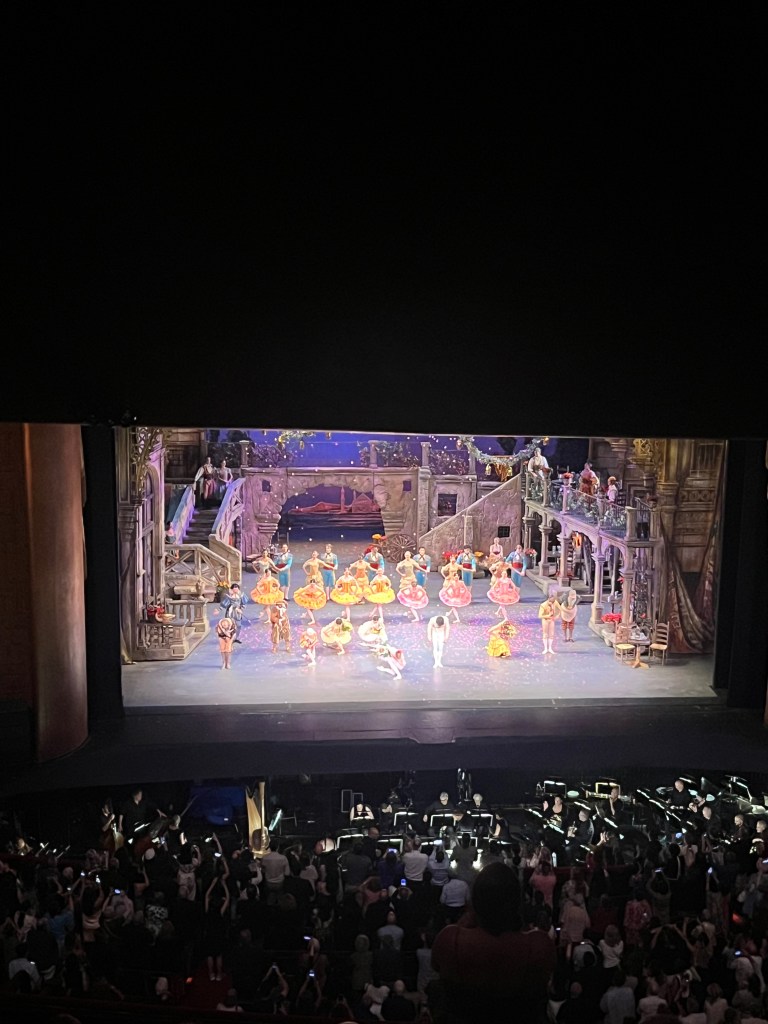
After a great match and emotions already running high, I got ready for the evening’s performance. Walking into the Met is always something else — there’s so much history in that building it almost feels like the opera house is telling you its own story as you move through it. It was a full house, and a wonderfully diverse audience.
Act I
The ballet opened with the beautiful Met Opera House orchestra. This production was staged by Susan Jaffe and Susan Jones, with additional music by Isaac Albéniz. The score was lovely throughout, though I wasn’t a fan of the toreador music edits in the third act.
Basilio was danced by Isaac Hernández, and Kitri by Catherine Hurlin — their chemistry onstage was excellent. The first act was rich in detail. I remember watching ABT’s Baryshnikov Don Quixote on repeat as a teenager, so seeing the sets come up live had a real emotional resonance for me.
The lighting, designed by Natasha Katz, genuinely impressed me. Having made ballets myself, I know how hard it is to find a great lighting designer, and I appreciated the craft on display here. The corps did solid work, and the comic scenes landed just as I’d hoped, beautifully interpreted by the cast. My one note: I’d love to see the corps use the stage’s full space more actively. I noticed a few moments of dancers simply standing in place without much interaction — something that wouldn’t register in a small theater, but reads very differently on the Met’s stage with its two-level sets. Kudos to everyone who kept that Spanish vibrancy alive throughout.
I’m not sure how much of the choreography was altered, but I found it a little odd to see petit allegro in the toreadors’ corps work — I’d expect sharper, more powerful movement in a section known for exactly that. Then again, that’s just my opinion; perhaps the choreographic research behind it found that appropriate.
The act ended on a rough note: Hernández attempted a triple tour and fell on his back. It was a good reminder that even ballet stars are human, capable of a wrong split-second decision like any other dancer — though some directors do take that kind of thing personally.
Act II
Once again beautifully lit, Act II gave us a standout from Léa Fleytoux as Cupid (Amour), whose enchanting bourrées made her look like she was gliding through fast-paced footwork. The Romani dance was also very well executed.
The dream scene lived up to its name — a dream. The costumes and overall design were so striking it felt almost like reading poetry in motion. That said, the corps again showed some spacing issues visible to a trained eye. Catherine Hurlin and Sierra Armstrong led the scene beautifully, with clean lines, conscious transitions, and artistry that suited the moment perfectly.
Act II closed with the tavern scene, delivering exactly what you’d expect: a big party, complete with a “duel” between Basilio and Espada, strongly danced by James Whiteside. The audience clearly loved it — plenty of laughter as the scene unfolded.
Act III
The third act itself was short and effective, built around the grand pas de deux and the wedding guests’ variations. The grand pas was well executed, with Hernández making safer, more deliberate choices this time after his fall in Act I, though he still seemed a touch anxious. I missed some of the finer details in his variation — taking more time in his tendu preparations to show off his lines, rather than chasing extra turns that occasionally looked like a fight to stay upright, and not quite finishing his last diagonal with full pointed feet through the transitional tombé pas de bourrée. Small things I notice and care about, but nothing, I think, that changed the audience’s experience.
Final Thoughts
The show was splendid. I love coming to New York to watch ballet as part of my solo adventures — finding peace, inspiration, and a little chaos, all in the same day.
Pittsburgh Ballet Theatre – A Midsummer Night’s Dream
Benedum Center, Pittsburgh | Sunday, May 17, 2026
This past Sunday I didn’t need to go too far to watch a good company deliver a great, clean, and fun performance. I drove to Pittsburgh to see Pittsburgh Ballet Theatre’s production of A Midsummer Night’s Dream, choreographed by Ben Stevenson with music by Felix Mendelssohn.
Pittsburgh Ballet Theatre was not entirely new to me — I caught their Wizard of Oz last May, choreographed by Septime Webre, and that was a blast. I’ve worked with Septime’s ballets before and loved them. That night actually planted a seed: I had the insight that I should start writing about the ballets I watch, since it’s something I do quite often, and now even more so. But I had never visited PBT’s facilities, and everyone I’ve ever met who came out of that company has said great things about it — and their dancers have always proven that reputation right.
A curious connection I have with PBT goes back to my first professional job in Brazil, dancing for SESIMINAS Cia de Dança in Belo Horizonte. That is the very company where Alexandre Silva trained — a dancer who would go on to become a principal with PBT for 12 years. I also worked with Cristina Helena back then; she helped produce a golden era of dancers in Belo Horizonte, and her influence still echoes. The Brazilian pipeline for the arts in the United States is real and formidable — the amount of talent coming out of Brazil is extraordinary.
Before getting to the performance itself, a word about the history of this ballet. Shakespeare wrote A Midsummer Night’s Dream around 1595, and the story has fascinated choreographers ever since. Felix Mendelssohn composed his famous overture for the play in 1826 — remarkably, when he was only 17 years old — inspired by his love for Shakespeare’s work. The shimmering strings evoking the enchanted forest and the playful woodwinds representing the fairies already showed the musical imagination that would define the Romantic era. In 1842, he was commissioned to expand the overture into a full suite of incidental music, which gave us the iconic Wedding March now heard at ceremonies worldwide. The story has since inspired a long lineage of choreographers: George Balanchine created what became his first completely original full-length ballet to this same Mendelssohn score, premiering at New York City Ballet in January 1962; Frederick Ashton created his one-act The Dream in 1964 for The Royal Ballet to mark the 400th anniversary of Shakespeare’s birth. Ben Stevenson’s version — which had its world premiere with Texas Ballet Theater in 2022 — was the first full-length ballet he had choreographed in 22 years. Sadly, Stevenson passed away in March 2026 at the age of 89. What we witnessed on Sunday was, in many ways, a tribute to one of ballet’s great storytellers.
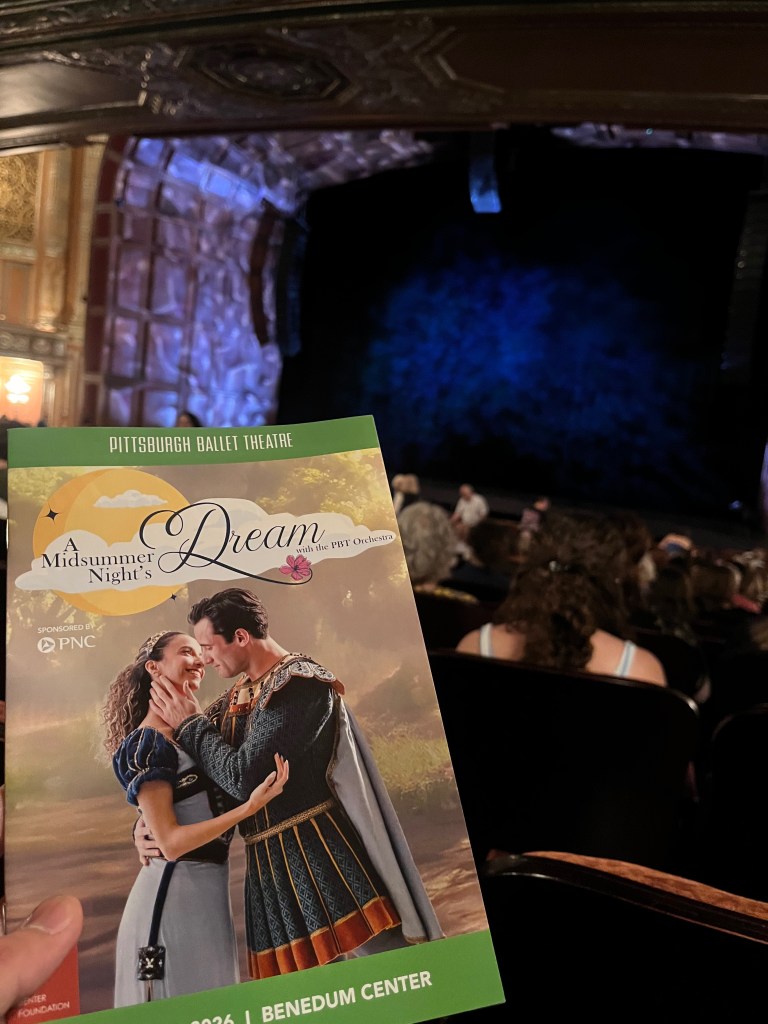
The Benedum Center is beautiful — very spacious inside, with a design and atmosphere that make you feel like you’re entering a sacred place. The waiting hall is a little tight, but it remains charming and full of character.
As usual, the show opened with a pre-curtain speech from Executive Director Nicholas Dragga and Artistic Director Adam McKinney. Both spoke well, but I’ll say what I always think in these moments: Adam could have connected more with the audience about the ballet itself. You never know who’s sitting out there — it could be someone’s first ballet — and those extra few minutes to paint the world of the story are never wasted. The speech ended, conductor Charles Barker stepped onto the podium, and the PBT Orchestra came to life beautifully, enhanced by the Mendelssohn Choir of Pittsburgh — a touch that added real depth and atmosphere to the evening.
The curtain rose, and Puck — performed by Emry Amoky — immediately captured our attention artistically. His embodiment of the persona was genuinely compelling and showed real investment in the character. However, the technical execution did not match the demands of a principal or soloist role of this caliber. The transitional steps were unclear, positions were not hit cleanly, and the choreography as a whole did not read with the technical sharpness that Stevenson’s work requires — he is an extremely demanding choreographer technically, and the gap was visible to a trained eye. Amoky is a young dancer with clear potential and plenty of room ahead of him. I hope he works on those details, because they make all the difference.
The role of Oberon, performed by Lucius Kirst, was another story entirely. Clean technique, strong and trustworthy partnering skills, and a genuine comedic instinct that came through beautifully in the acting. He was a pleasure to watch. PBT’s women were remarkably strong across the board: Hanna Carter as Titania, Tommie Lin Kesten as Hermia, and Grace Rookstool as Helena were all beautiful, musical, and hilarious in equal measure. Their comedic timing and sense of rhythm stood out especially — musicality at that level elevates everything around it. Matthew Griffin as Bottom rounded out the principal cast with a strong performance: funny, technically solid, and fully entertaining without ever tipping into slapstick for its own sake.
What struck me most about this ballet is how easy it is to follow the story. Ben Stevenson’s narrative intelligence is something truly rare — his ability to communicate directly with an audience, to make complex dramatic situations instantly readable through movement, is a gift that few choreographers possess. I studied his Cinderella years ago and always admired his storytelling instinct; seeing it live, especially in a work this whimsical and layered, reinforced everything I thought. The first act was genuinely hilarious. The second act went by so fast it felt like minutes — which is always the highest compliment you can give a production.
I will definitely be back. Pittsburgh is right there, PBT is a serious company, and Sunday was a very good reminder that you don’t always have to travel far to find quality ballet.
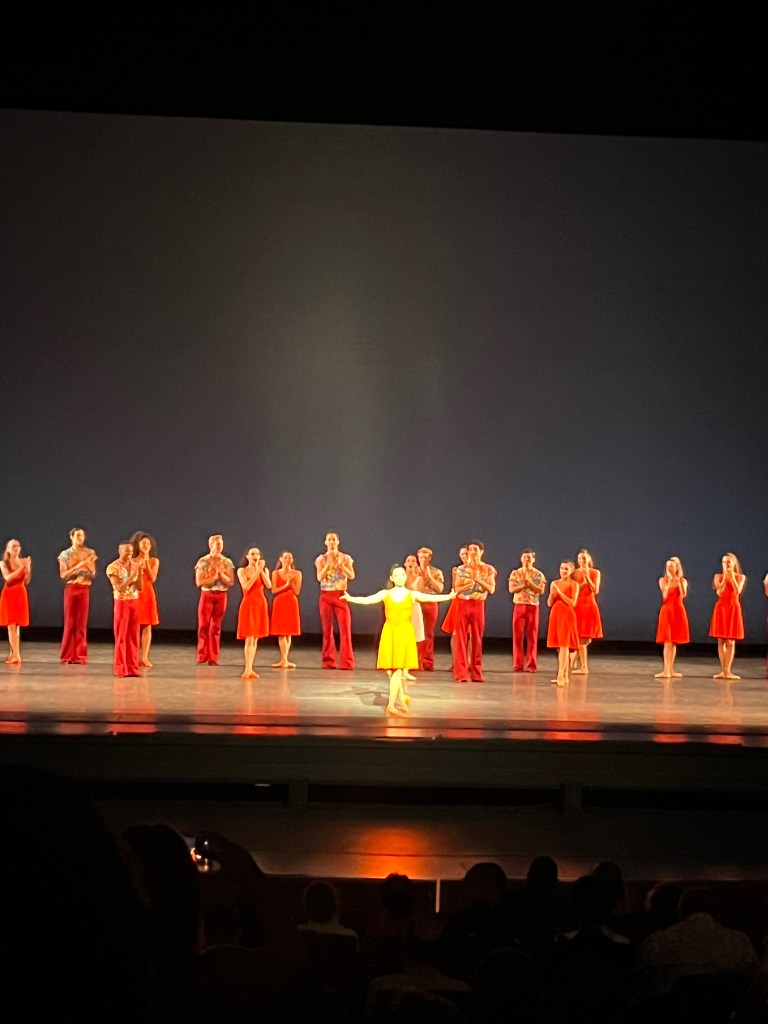
Miami City Ballet — ¡Vamos! To the Beach Broward Center for the Performing Arts, Fort Lauderdale — May 2026
This past Sunday I made the trip down to Fort Lauderdale to watch Miami City Ballet for the first time in years, and the occasion could not have been more special: the retirement performance of my dear friend and former classmate, Nathalia Arja.
Nathalia and I go back over twenty years, to when we were both young students training under her mother at the Escola de Dança Alice Arja in Rio de Janeiro. We were kids then — wide-eyed and dreaming. She left Rio at fifteen, which in Brazil is the age of a quinceañera, a full-blown celebration of a young woman stepping into the world. I was there for her party. I remember it clearly. And now, decades later, I was there again — this time to watch her take her final bow as a Principal at one of the most prestigious ballet companies in the United States. Nathalia joined Miami City Ballet as a school apprentice in 2009, rose through the corps, was promoted to soloist in 2014, principal soloist in 2016, and finally to Principal in March 2020. That kind of trajectory, built entirely on discipline, artistry, and sheer force of personality, deserves every standing ovation it gets. The New York Times once called her “fabulously fearless” and “exultant,” and anyone who has watched her work will tell you that barely scratches the surface. Watching her on that stage Sunday, filled with joy, completely in her element, having the time of her life — that was worth every mile.
There was also a personal dimension to being back in that building. Miami City Ballet was, in a very direct sense, the reason I moved to the United States. I attended their summer intensive in 2009 on a full scholarship, and from the moment I arrived, something clicked. The facilities, the professionalism, the energy — it all showed me what was possible. I didn’t stay that year, but it planted the seed that eventually brought me to Milwaukee and then to everything that followed. Coming back now, as a professional myself, felt like closing a circle.
The program itself carries a name that perfectly captures MCB’s brand identity: ¡Vamos! To the Beach is a fun, fresh program built around the ultimate Miami beach day — sun, movement, music, and culture brought to life through dance, in a true reflection of the city. That is exactly what Miami City Ballet does better than almost anyone: they make ballet feel like it belongs here, like it grew out of this particular soil. The marketing alone for this season was exceptional — cinematic, warm, and thoroughly Miami. The Broward Center itself was gorgeous that evening, right along the Riverwalk in downtown Fort Lauderdale, with skyline views that make the whole experience feel like a proper night out.
The program unfolded as a three-part repertory evening with no purely classical score anchoring it — just an all-American musical arc: The Andrews Sisters, George Gershwin, and The Beach Boys. That’s a bold curatorial choice, and for the most part it worked.
The night opened with Paul Taylor’s Company B, set to the swing-era recordings of The Andrews Sisters. The piece is deceptively layered — on the surface it’s all sass and Americana, bright-eyed girls and sailor boys, but underneath it carries the shadow of wartime. Taylor weaves loss into the exuberance, and that contrast gives the work its emotional weight. Watching Nathalia inhabit that material — completely free, completely present — was exactly the retirement performance she deserved. Pure joy on stage.
The second piece was the world premiere of Durante Verzola’s Grand Glittering Gershwin, and this was the highlight of the program for me — both artistically and personally. Structured in three sections, it brought an athleticism and vibrancy to the stage, with five couples, a trio, and a small female ensemble filling the space with buoyancy and speed — spunky, alive, articulate through the wrists and arms, with a distinctly American kinetic energy. I had the privilege of working with Durante at the Suzanne Farrell Ballet at the Kennedy Center, and he was already an exceptional talent then. What he has become since is no surprise to me. His choreographic instincts remind me of the Balanchine tradition — graceful, technically demanding, structurally rich — but with his own voice fully present. Art Deco cool meeting contemporary style, as vibrant and free-spirited as Miami itself.
The closing work was Twyla Tharp’s Deuce Coupe, a company premiere for MCB. Originally created in 1973, the piece is a landmark crossover ballet that fuses classical technique with contemporary social dance, set to a medley of Beach Boys songs. Its signature device — a lone ballerina in white proceeding methodically through the entire classical vocabulary while a vibrant ensemble churns around her — creates a fascinating tension between tradition and rebellion. It drew younger audiences who came knowing the music but had never engaged with ballet before, and that remains part of its enduring power. It’s a high-energy, unapologetically fun closer, and seeing Rui Cruz absolutely living in it was a pleasure. He’s a wonderful dancer, and this kind of work lets his natural charisma breathe.
Speaking of which — the Brazilian presence in this company continues to be remarkable. Nathalia, Rui, and the broader pipeline of Brazilian talent at MCB is not accidental. It reflects a deep culture of rigorous, passionate training back home, something I wrote about recently when discussing the global reach of Brazilian ballet dancers. Nathalia herself began training at five years old in Rio, competed internationally, won scholarships to companies on multiple continents, and chose Miami — and Miami City Ballet is better for it. After the show I had the chance to reconnect with some old friends, including Renan Cerdeiro, who spent over a decade as a Principal with the company and whose legacy here is undeniable. There was something genuinely moving about having so many people from that original Rio circle together again under one roof, all of us having traveled such different paths to get there.
This was MCB’s 40th anniversary season finale, and they closed it with grace, energy, and heart. I’ll be making more trips to Miami. There is a lot to see — and clearly, a lot still to come.
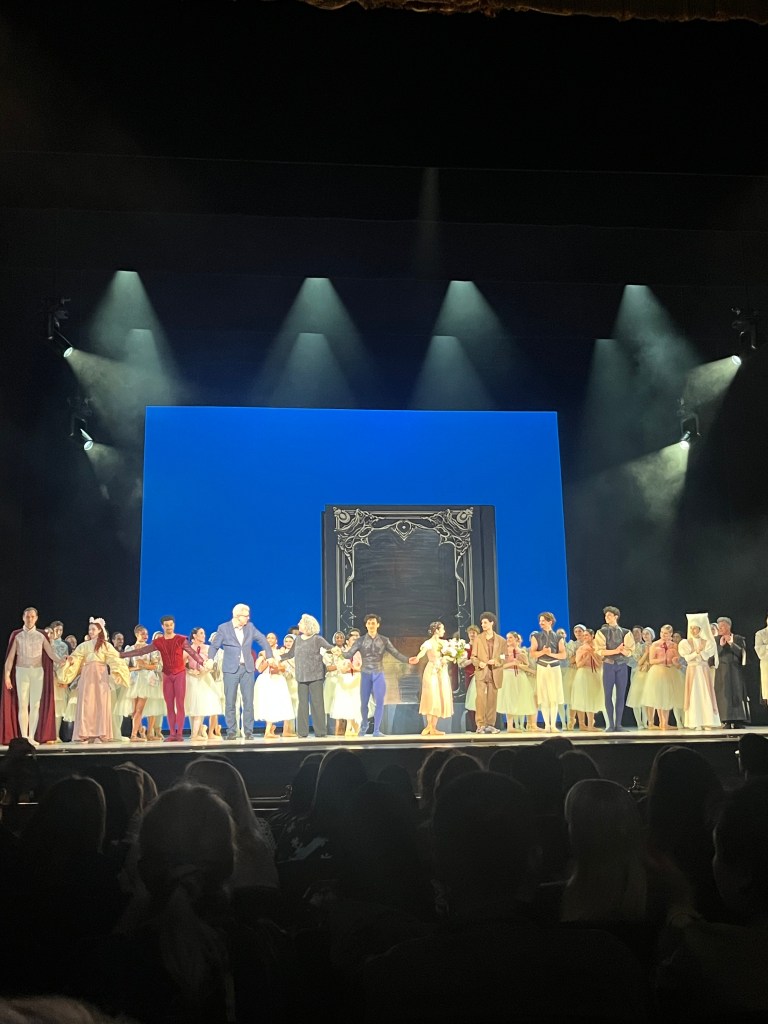
Reading Verona: A Review of Juliano Nunes’s Romeo and Juliet for Philadelphia Ballet By Stephano Candreva | April 30, 2026
Thursday evening, April 30th, I drove to Philadelphia to see Juliano Nunes work again — this time with something different at stake. Unlike his world premiere with ABT, this is Nunes’s first full-length narrative ballet, and that distinction matters. The Academy of Music received us with the weight of its history the moment you step into the grand hall. It was a sold-out Thursday night performance, which is remarkable by any measure — though perhaps less surprising when Nunes’s name is attached.
A few weeks prior, I had attended Works in Process at the Guggenheim Museum of Art — an open rehearsal format paired with a conversation with the choreographer. Watching Juliano move through the studio, coaching dancers toward the truest expression of the work, brought something back for me. In 2019, I had the privilege of working with him at Atlanta Ballet. The pandemic took that creation away from us before we could perform it, but not before it left a mark. I remember asking him how to improve my craft. He told me to take the time to explore movement as many times as necessary — to understand where it originates. That advice sent me deep into improvisation practice, into the kind of physical inquiry that still informs how I work today. Seven years later, watching him shape another company’s body of artists, that conversation felt very present.
Philadelphia Ballet has recently moved into a new, state-of-the-art facility — an achievement that deserves more than passing acknowledgment. Anyone with real experience inside performing arts nonprofits understands that something like this is not simply a capital campaign. It is years of sustained vision, relationship building, and institutional will. Executive Director Shelly Power deserves significant credit for it.
The evening opened with brief remarks from Artistic Director Angel Corella and Shelly Power. I’ll be direct: I missed an opportunity here. One of the most powerful things an artistic director can do before a performance is connect the audience to the work — the history of the Prokofiev score, when it was first staged, the lineage of choreographic interpretations. That context doesn’t diminish a new production; it elevates it, and it deepens the bond between an institution and its public. It was a small omission in an otherwise impressive evening, but worth noting.
Then the orchestra began.
Prokofiev’s score under conductor Beatrice Jona Affron was flawless from start to finish — and I use that word deliberately. The playing gave the dancers something extraordinary to move inside of.
What Nunes has built here is, at its core, a deeply literary ballet. And I mean that as high praise. Romeo and Juliet belongs to Shakespeare — not to MacMillan, not to Cranko. What Nunes has done is tell the story his own way, and that should be normalized in our art form. His version felt like turning pages: the music as the hardcover, the sets and costumes by Youssef Hotait as the pages, and the movement as the words themselves. It began with a single image — a large book, bold letters: Verona. From that moment, the visual logic never let go.
Romeo was danced by Zecheng Liang with exactly the energy Shakespeare wrote — youthful, elegant, playful, and reckless with love. His dark and light blue costuming enhanced his line beautifully. A particular standout was Jorge Garcia Alonso as Benvolio — I had already noticed him at the Guggenheim, but at the premiere he exceeded even that impression. His lines, his quality, the ease with which he inhabits the stage at such a young age: this is a dancer to watch closely. Mercutio, performed by Isaac Hollis, was solid, though I found myself wanting more — particularly when he shared the stage with Arian Molina’s Tybalt, who owned every moment with a command of character and technical authority that was genuinely phenomenal.
A special mention for Mayara Piñeiro as the Harlot. She brought a character fully to life — present, powerful, and real. Principal dancers earn their title by making a difference in every role they inhabit, regardless of scale. She did exactly that. I also appreciated that the harlots’ costuming avoided the gratuitous sexualization that this type of role often invites. It was a thoughtful choice that honored the characters without undermining them.
A recurring visual motif throughout the production was a papyrus-textured backdrop that descended during scene transitions — another page turning, another chapter opening. As the story darkened, the pages themselves bore marks: deep, shadowed streaks that recalled the look of a cut wound. It was subtle, intelligent design.
Thays Golz as Juliet has grown remarkably. I have been watching this company engage with Nunes’s vocabulary over several years now, and the evolution is visible in her body. She moves with grace and occupies her space with full authority. Her partnership with Liang carries a particular authenticity — they are a couple in life, and that knowledge lives in the performance. Their duets conveyed the specific texture of young, naive love: the certainty of it, the recklessness, the belief that the world can be faced and defeated together.
The balcony pas de deux deserves its own paragraph. The balcony was integrated directly into the book structure, with a field of stars behind and Juliet centered above as the wind caught her dress. The partnering that followed was deeply musical, technically demanding — Nunes’s signature lifts and maneuvers — and emotionally true. There were moments where it felt as though the music was moving the dancers rather than the other way around. That is a rare and beautiful thing to witness.
A note on the corps de ballet: the consistent, sustained relationship between Nunes and this company has produced something real. The corps delivered work that, in my judgment, was stronger, cleaner, and more musical than what I saw from ABT’s corps in his work there. Nunes’s choreographic language is not simple. It rewards investment and time. Philadelphia Ballet has clearly invested both.
The second act delivered its tragedy with full dramatic weight. The death of Mercutio — comical and then devastatingly sudden — had the audience laughing until it held its breath. Romeo’s confrontation with Tybalt, and the final scene at the tomb with Paris, played with all the inevitability and sorrow the story demands. Watching young love destroyed by the hatreds of others, knowing the ending before it arrives and feeling it anyway — that is the test of storytelling. Nunes passed it.
Congratulations are due to everyone involved: the dancers, the orchestra under Beatrice Jona Affron, set and costume designer Youssef Hotait, and above all Juliano Nunes — for creating something that is genuinely his, genuinely whole, and genuinely moving. I am already looking forward to what comes next.
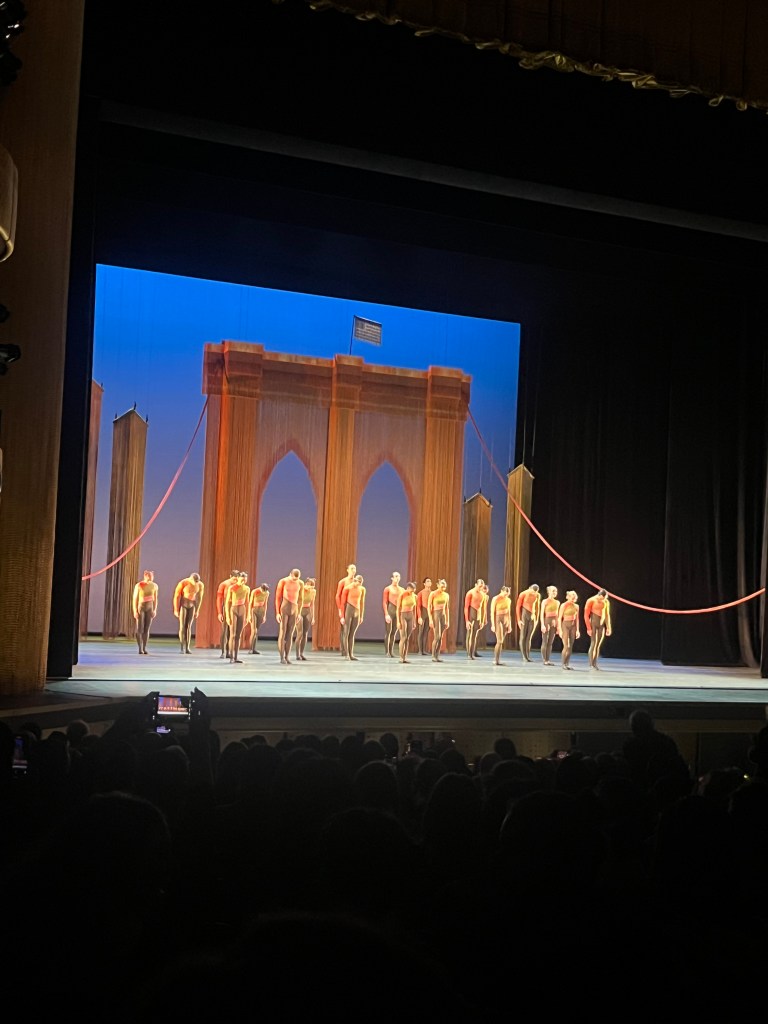
Review: ABT@85 – Innovations Past and Present
October 29, 2025 – David H. Koch Theater, Lincoln Center, NYC
TL;DR: Nunes’ Have We Met?! lands as a cinematic, emotionally precise story ballet; Ratmansky’s Serenade after Plato’s Symposium rewards focused listening; I missed Theme and Variations to catch a flight—yet the evening felt complete.
On October 29th, I had the chance to travel to New York to watch one of my favorite choreographers — someone I truly believe represents the future of ballet. I attended ABT@85: Innovations Past and Present, and what an evening it was.
I arrived early that morning in New York City, a place that never loses its charm or energy. I spent the day people-watching, walking through Central Park, and soaking in the city’s creative pulse — hearing everything from Portuguese to languages I couldn’t even recognize. New York is endlessly rich in culture. Posters for theatre plays, live orchestras, and ballet performances fill every corner; there’s simply too much to take in. Even with all its challenges, it remains a magical city — one where art and diversity constantly collide.
I wish “ballet-hopping” could actually be considered a form of tourism — fly in, watch a masterpiece, and go home inspired. That day, I managed to walk up to the box office and get a rush ticket with a surprisingly good seat. The show was at 7:30 p.m., so I still had time to wander and, as always seems to happen in New York, I ran into someone from my past. Around 6 p.m., I stopped by The Smith for a drink and realized the person sitting next to me was someone I used to work with at the Kennedy Center, back when I was with Suzanne Farrell Ballet. What a small world. We reminisced about those days and about Suzanne — one of the most inspiring ballet icons I’ve ever met.
Around 7 p.m., I walked across the street to the David H. Koch Theater. The theater is breathtaking, especially its golden foyer — it always feels like stepping into another world. That night’s program featured three ballets:
Have We Met?! – World Premiere by Juliano Nunes
Serenade after Plato’s Symposium – Alexei Ratmansky
Theme and Variations – George Balanchine
• Have We Met?! – Choreography by Juliano Nunes
Music by Luke Howard | Set and Costume Design by Youssef Hotait
The night opened with Nunes’ new ballet, Have We Met?! — a story ballet that feels universal, familiar, and deeply human. It tells the love story of Rose and Julian, separated by the tragedy of the Great War, only to meet again 110 years later as Orion and Arya. The idea that love can transcend lifetimes, that two souls might be written into each other’s DNA, was portrayed with such delicacy that it struck something deep in me. I think everyone, at some point, has met someone who feels strangely familiar — as if they’ve known them before.
The ballet began in silence: Heo Seo and Isaac Hernández approached each other slowly, discovering each other through movement. Then the backdrop lifted, revealing a stunning set — the Manhattan Bridge, delicately constructed with strings. It was breathtaking, far beyond what I’ve seen in some recent large-scale narrative ballets. The corps de ballet, dressed in dark, era-appropriate costumes with long gloves, created a strong and clean visual impact — such a simple but brilliant design choice.
Nunes’ choreography carried his unmistakable aesthetic — fluid, intricate, and deeply musical. His use of space and structure gave the piece a cinematic quality. When Isaac Hernández danced his solo, I got chills. His artistry, power, and emotional surrender were remarkable — you could feel his pain, not just see it. He is, without exaggeration, one of the best dancers I’ve ever seen live.
The second half, set in 2038, began again in silence with Daniel Camargo and Catherine Hurlin as Orion and Arya. This time the atmosphere was lighter, colorful, and modern. Camargo and Hurlin danced with great connection, though I personally found Hernández’s performance more compelling — his presence felt raw and magnetic. The male corps particularly impressed me in this section — sharp, present, and powerful. The ballet closed with a sense of renewal and lightness, suggesting that love and destiny repeat until peace replaces tragedy.
Nunes continues to bring something truly different to ballet today. In my opinion, he’s shaping what ballet will evolve into next — carrying forward the musical intelligence and emotional honesty that choreographers like Liam Scarlett once brought to the stage. I can’t wait to see Nunes’ Romeo and Juliet with Philadelphia Ballet this coming spring.
• Serenade after Plato’s Symposium – Choreography by Alexei Ratmansky
Music by Leonard Bernstein | Sets and Costumes by Jerome Kaplan
Ratmansky’s Serenade after Plato’s Symposium opened with a fascinating stage image — a stretched square above the dancers covered in writing (I believe in Cyrillic). The ballet features seven men and one woman, each representing a different perspective on love inspired by Plato’s dialogues.
At first, I wasn’t sure about the costume design — the loose pants, especially for James Whiteside, dragged and hid the dancers’ lines. But as the piece unfolded, the music, the structure, and the intention behind each section began to pull me in.
Ratmansky’s choreography is complex, intellectual, and layered. It’s a conversation through movement — at times analytical, at times spiritual. He uses every beat of Bernstein’s score, intertwining rhythm and counterpoint like dialogue. It’s not choreography that asks you to feel immediately — it asks you to listen and reflect.
Calvin Royal III performed with extraordinary lyricism — weightless, musical, and serene. Watching him felt like watching poetry glide through air. Takumi Miyake, in contrast, delivered explosive virtuosity — his jumps and turns had precision and fire, yet he never lost control or musicality. Herman Cornejo, ever the master technician, danced with clean lines and depth, showing why he remains one of ABT’s great artists. Sunmi Park, the lone woman, carried her role with elegance and quiet power, weaving through the men as both muse and equal.
Ratmansky reminds us that choreography can be both cerebral and emotional — his work here felt like a reflection on the essence of love: intellectual, physical, spiritual, and imperfectly human.
• Theme and Variations – Choreography by George Balanchine
Music by Tchaikovsky
Sadly, I had to leave before Theme and Variations began to catch my flight to Europe — but even without seeing it, the evening already felt complete. It was a perfect balance of innovation, reflection, and reverence for ballet’s past and future.
Final Thoughts:
That night reminded me why I love this art form — how it connects the past, present, and future through movement, emotion, and imagination. From Nunes’ visionary storytelling to Ratmansky’s intellectual depth, ABT’s Innovations Past and Present was a living example of ballet’s evolution — and its enduring beauty.
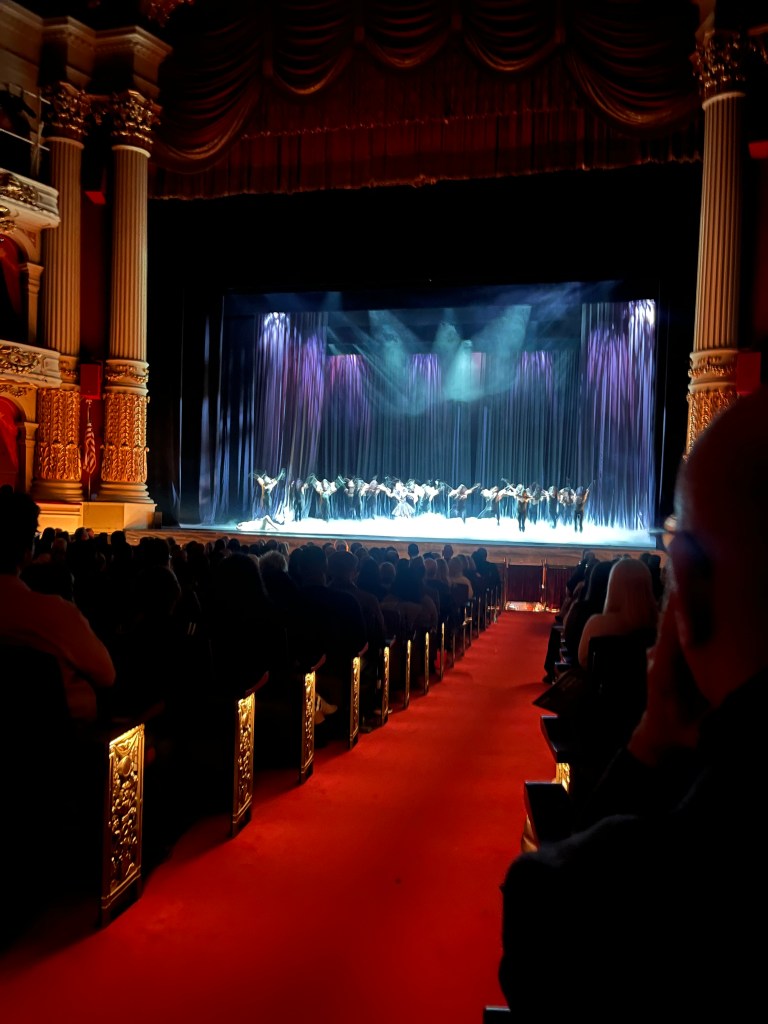
Review: Evening of Horror — Philadelphia Ballet at the Academy of Music
October 17, 2025 – Academy of Music, Philadelphia, PA (Friday)
TL;DR: De Mille’s Fall River Legend reads theatrically clear; Nunes’ Valley of Death is the reason to go—sumptuous design, charged partnering, and a final image that lingers.
Philadelphia Ballet presented an Evening of Horror featuring two contrasting works: Fall River Legend, choreographed by Agnes de Mille to music by Morton Gould, and Valley of Death, a world premiere by Juliano Nunes set to the music of Sergei Rachmaninoff and Ralph Vaughan Williams, with costumes and scenery by Youssef Hotait.
The performance took place at the historic Academy of Music in downtown Philadelphia—a breathtaking theater. I arrived early enough to sit and take in its beauty for about twenty minutes before the show began. From the ceiling paintings of angels to the gilded ornamentation and rich acoustics, the setting alone was an experience.
I hadn’t planned to see this performance originally. My schedule has been packed, and I only found out on Thursday that Nunes’ new work would premiere this weekend. Juliano kindly offered me two tickets, and as someone who’s followed his journey for years, I couldn’t miss the chance to see it in person. It was my second time attending a Philadelphia Ballet performance—the first being Forward Motion, a triple bill that also featured one of his premieres. Since Nunes is the company’s resident choreographer, it’s common to see his works appear regularly in their repertory, each revealing a new layer of his evolving artistry.
Fall River Legend — Agnes de Mille
The evening opened with Fall River Legend, a dramatic retelling of the Lizzie Borden story. The production carried a Broadway-like theatrical flair, especially with the clever inclusion of the “Speaker of the Jury,” whose narration guided the audience through the story. For newcomers to ballet, that touch made the work accessible and engaging.
The piece drew laughter at moments and showcased strong acting from the dancers, but from a choreographic standpoint, it felt somewhat simple for a company of Philadelphia Ballet’s level. The women’s costumes were elegant and era-appropriate, but I found the men’s costumes unflattering—they lacked silhouette and failed to emphasize the dancers’ lines, diminishing the visual strength of the male ensemble.
Principal dancer Mayara Piñeiro delivered a compelling performance, embodying the storytelling style required for de Mille’s choreography. I had seen her dance before during my previous visit, and she continues to impress with her dramatic and technical clarity. The orchestra, as expected, was excellent—precise, warm, and expressive. Overall, Fall River Legend was a solid production, if not a particularly demanding one for a company of this caliber.
Valley of Death — Juliano Nunes (World Premiere)
The second piece of the night—and the reason I made the six-hour drive to Philadelphia and back—was Juliano Nunes’ Valley of Death. I’ve followed Juliano’s artistic path since before his choreographic career truly began, back when he expressed his artistry through painting and poetry. That same sensitivity and depth remain evident in his choreography today.
The stage design was striking: a massive red velvet drape shaped like a grand ballroom curtain hung across the back, framed by three chandeliers—one large at center and two smaller on the sides. The deep reds against a dark, almost shadowy background immediately set a gothic and suspenseful tone.
The dancers entered in dark, elegant costumes, performing intricate partnering sequences that reflected both tension and intimacy. Yuka Iseda (Agatha) was exceptional—musical, precise, and entirely in sync with Nunes’ choreographic voice, where every note finds its own gesture. Ashton Roxander (Oscar) danced with a strong, clean presence, while So Jung Shin (Beth) offered lyrical contrast with her soft port de bras and fluid transitions.
One thing I particularly admire in Juliano’s work is how he often plays with androgyny and costume fluidity—placing men in tutus or designs that blur gender expectations. It’s never done for effect, but rather as an extension of his artistic vision, where movement transcends identity. In Valley of Death, it took me a while to realize that some dancers I initially thought were women were in fact men, and that ambiguity made the piece even more intriguing. It reminded me of his earlier work Interlinked, created for the Royal Birmingham Ballet, which also featured a strong androgynous presence—moments where you truly couldn’t tell whether you were watching male or female dancers. That fluidity feels intentional, adding another layer of beauty and inclusivity to his choreography.
Nunes’ work challenges dancers both technically and emotionally, and the cast met that challenge with commitment and nuance. One of the most powerful moments came when the dancers lifted Agatha and Oscar as the chandeliers and red velvet rose into darkness, the stage engulfed in smoke. The image was haunting—like time and memory dissolving into the void.
Youssef Hotait’s costume designs added an essential dimension to the work, especially Agatha’s gown with its structured shoulders. The design amplified Iseda’s movement, expanding her upper-body expression and magnifying the drama of each phrase.
Valley of Death was an unforgettable experience—visually rich, emotionally charged, and executed with precision. Philadelphia Ballet danced beautifully, fully embodying Nunes’ vision. I left the theater both inspired and eager to see his upcoming world premiere with American Ballet Theatre on October 29th.
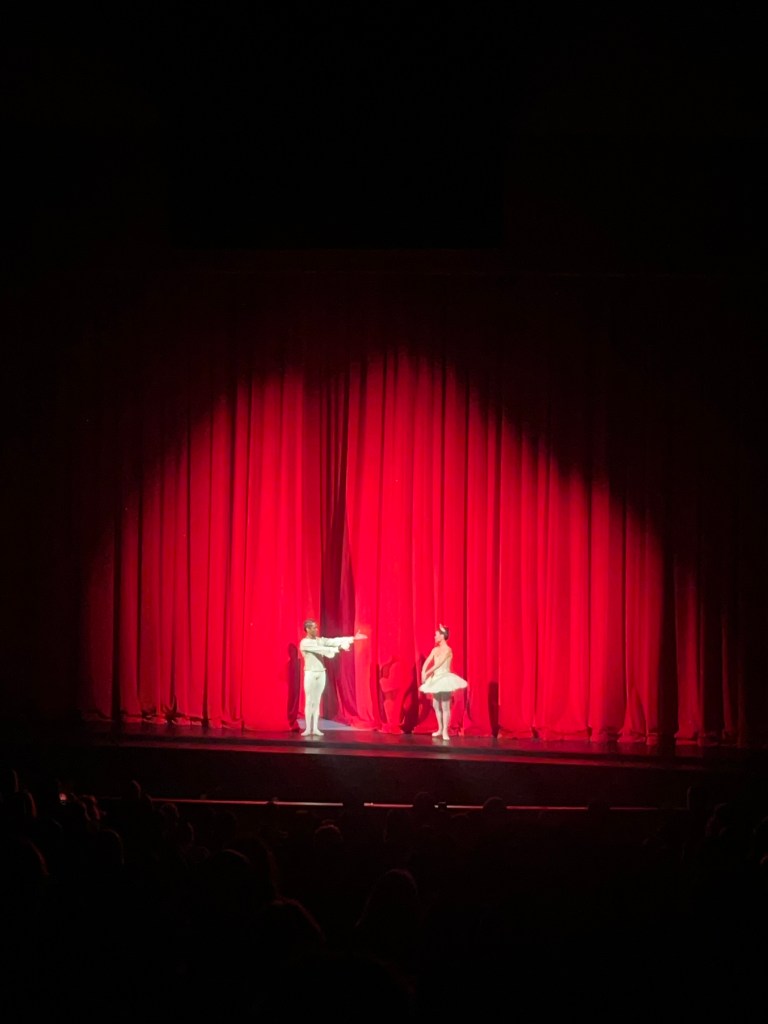
Review: Jewels — Pacific Northwest Ballet
October 3, 2025 – Seattle, WA (Friday)
TL;DR: Women drive the night in Emeralds and Rubies; Diamonds crowns the program with commanding leads (Jonathan Batista & Angelica Generosa) and a cohesive corps.
As many of you know, I’ve been traveling across the U.S. to watch performances by friends and colleagues, often seeing their commissions on major ballet companies. Given my professional background, I’ve decided to start sharing my impressions from these performances.
Last night, I attended Pacific Northwest Ballet’s Jewels. I left Ohio at 6 a.m. to make it to Seattle in time not only to see the show but also to support a friend making his debut in Diamonds.
First, I must acknowledge how thoughtfully designed PNB’s facilities are. Having the theater, studios, costume shop, and wardrobe all in the same block creates a strong sense of cohesion and contributes greatly to the dancers’ quality of life. A dancer’s career thrives on routine, and such an environment provides both comfort and stability.
I can’t recall if I’ve seen the full Jewels program before, but I’m very familiar with Emeralds and Rubies, two ballets in which I’ve performed principal roles. That experience lets me watch them through a slightly different lens than Diamonds.
I often joke that the Balanchine Trust holds pieces of Mr. Balanchine’s soul—like Voldemort, but in a positive way. Each répétiteur sets his choreography with their interpretation of what Balanchine intended, meaning each production carries a distinct shade of his spirit.
Emeralds opened the evening with the expected sense of beauty—a living painting on stage. The costumes were exquisite, sparkling even from the lobby. The men’s green velvet tunics fit perfectly, and the backdrop evoked a twilight sky over Carmel, California. The women danced with musicality and elegance that captured Balanchine’s vision of femininity. Unfortunately, one of the male leads failed two double tours, marking them rather than committing to the movement. Mistakes happen, but at a company like PNB, technical excellence extends beyond pointed feet—it includes transitions, partnering, and presence. Amanda Morgan gave a standout performance, full of grace and artistry. The three men, however, lacked synchronization, and some stylistic choices diverged from what I’ve learned when coached in this ballet.
Rubies followed and was again dominated by the women’s energy. The costumes worked well overall, though I personally would have preferred the men in red velvet jackets with rhinestone accents to match the women’s sparkle. The principal male dancer was charismatic and entertained the audience, but he occasionally fell off the music and lost the playful looseness the choreography demands. Sarah was beautifully musical, but at times overreached for height in her extensions, sacrificing alignment and making her appear shorter. Rubies should shine with sophistication and control—qualities slightly lost in those moments. Still, the female corps delivered power and precision that elevated the ballet.
Diamonds closed the night triumphantly. Some might assume I’m biased since my friend Jonathan Batista led the performance alongside Angelica Generosa—but even if I tried, I couldn’t find fault. Jonathan has always been a powerhouse, and witnessing his growth over the years fills me with pride. He and Angelica commanded the stage with the regal authority Diamonds demands. The corps de ballet was strong and cohesive, and the men finally matched the level of the women.
I noticed Ashton Edwards among the soloists. While I respect the director’s artistic vision, their arm line felt too masculine beside the other soloists. Ballet is built on contrast and harmony, and regardless of gender, I hope that dancers performing traditionally feminine roles continue to embody that aesthetic quality.
Overall, it was a memorable evening.
While there were moments of uneven execution, the performance reached the level of excellence expected from a company of PNB’s stature—thanks especially to Jonathan Batista and Angelica Generosa, who closed the night on a truly brilliant note.

